



Where are you located, how can people reach you, and what areas do you serve?
My primary office is at 225 Union Blvd, Suite 150, Lakewood, Colorado 80228. This location puts me at the center of the west Denver metro in the Union Square business district, a well-connected commercial corridor near the intersection of Union Boulevard and 6th Avenue. I also maintain a home office at 5197 S. Drew Ct, Littleton, Colorado 80123, which sits in the heart of the neighborhood communities where much of my core business is conducted.
You can reach me directly at (303) 588-7000. The main office line is (303) 933-7000. My professional email is , with monitored as a secondary channel. I am accessible by phone, text, email, Facebook messaging, Instagram messaging, and through scheduled Zoom consultations for clients who prefer to meet remotely.
My service territory spans the Denver Front Range with active working knowledge across Lakewood, Littleton, Arvada, Denver, Englewood, Highlands Ranch, Centennial, Aurora, Westminster, Thornton, Evergreen, Conifer, Franktown, Elizabeth, Boulder, Colorado Springs, Fort Collins, and Greeley. At the county level, my primary work is concentrated within Jefferson County, Denver County, Arapahoe County, Adams County, Douglas County, Boulder County, El Paso County, and Weld County.
This footprint reflects where I actually work, where I travel regularly, and where I maintain current, practical market knowledge. I do not claim blanket statewide coverage. What I offer instead is deep, accurate, locally grounded expertise across a defined geography that I have served continuously for more than four decades.
How quickly do you respond to clients, and what can someone expect when they reach out?
Responsiveness is one of the most important commitments I make to every client, and I measure it rather than just promise it. My average response time is 33 minutes. For urgent matters, I target 30 minutes or less. For general inquiries during business hours, I aim to respond within one to two hours. Those are not aspirational numbers. They are tracked and consistently achieved.
My standard business hours are 9:00 AM to 6:00 PM Monday through Friday and 10:00 AM to 5:00 PM on Saturdays, Mountain Time. Sundays are reserved for family and church, and I respond on Sundays only to truly urgent matters. Everything else is addressed first thing Monday morning.
When I am actively with a client, I give that person my full attention. I do not divide focus. Even in those moments, my response time to others still averages under two hours. That discipline reflects a core belief: the person in front of me deserves full presence, and the person waiting on a response deserves accountability. Both matter.
I update my voicemail greeting daily and frequently give callers a specific return call window so they know exactly what to expect. I take urgent calls until 8:45 PM. After 9:00 PM, messages are addressed the following day. I do not sleep with my phone. That boundary exists because good judgment is the most valuable thing I bring to every transaction, and judgment requires rest.
What clients find when they reach out is not an assistant, a chatbot, or a form. They find me. That directness is deliberate and non-negotiable.
What licenses and professional designations do you hold, and why do they matter to the people you serve?
I hold an active Colorado real estate license, number ER.001096355, issued at the Employing Broker level. I have been continuously licensed since 1984. As Broker Owner of Urban Companies Real Estate, I operate at the highest level of responsibility the state authorizes. That means I am not just representing buyers and sellers. I am personally responsible for regulatory compliance, transaction oversight, trust account management, and agent supervision across the entire brokerage. My license is publicly verifiable through the Colorado Division of Real Estate.
My professional designations represent years of advanced education and examination well beyond what a standard license requires. I hold the CBROC, Certified By Referral Only Consultant, which reflects intensive training in relationship-based, referral-driven business systems. The GRI, Graduate of the REALTOR® Institute, required advanced study across contracts, legal issues, negotiation, and market analysis. The CRS, Certified Residential Specialist, is one of the most rigorous designations in residential real estate, earned through extensive coursework and demonstrated professional performance.
I am also a long-standing REALTOR® member of the Denver Metro Association of REALTORS®, which binds me to the National Association of REALTORS® Code of Ethics. That code is enforceable. It establishes clear standards around honesty, disclosure, fiduciary duty, and professional conduct that go well beyond what state licensing alone requires.
For clients, these credentials translate into something practical: better guidance at every decision point, stronger negotiation strategy, clearer risk management, and broker-level oversight on every transaction. This is not a resume. It is the foundation of how I actually work.
What professional organizations are you part of and why does that ongoing involvement matter?
I am an active REALTOR® member of the Denver Metro Association of REALTORS®, which connects me to the National Association of REALTORS® through local membership. That affiliation is not symbolic. It creates enforceable ethical accountability, ongoing education requirements, and direct access to the regulatory updates and market practice changes that affect clients in the Denver metro area. I track those changes because what I do not know can hurt the people who trust me.
Beyond real estate specific organizations, I am a member of Toastmasters International, including the South Suburban Toastmasters chapter. This surprises some people when they hear it, but communication is one of the most important skills in this business. The ability to present complex market data clearly, explain contracts without creating confusion, conduct compelling video tours, and speak with confidence at community events directly affects client outcomes. Toastmasters has sharpened those skills consistently. I also speak regularly to congregations in my local community, approximately once a month, and that practice reinforces the same values: clear communication, service, and trust.
I am also a participating member of the Hero Circle coaching community within the By Referral Only organization. This is a structured peer environment built around accountability, best practices, and long-term relationship development rather than transactional shortcuts. Weekly participation keeps me sharp, connected to what is working across the industry, and honest about where I need to grow.
These are not passive memberships. They are active professional relationships that make me a better advisor. The people I serve benefit from that investment even when they never see it directly.
Why did you choose Urban Companies Real Estate, and what does that brokerage environment mean for your clients?
Urban Companies Real Estate is not a franchise, a national chain, or a corporate operation with a distant headquarters making decisions that affect your transaction. It is a locally owned, family operated boutique brokerage that has served the Lakewood and west Denver metro community continuously since 1986. That history and that ownership structure matter in ways that most clients do not initially consider.
I was drawn to this brokerage because of its values, not its scale. High standards, personal service, and deep local roots were built into this company from its founding. Clients today increasingly want to work with businesses where leadership is accessible, decisions are made locally, and the people serving them have a genuine stake in the outcome. That is exactly what Urban Companies Real Estate provides.
The support structure here is intentional and tight. Quarterly mastermind meetings focused on relationships, monthly team huddle calls, and three in-person social events each year keep our agents connected and sharp. Daily access to ownership, including myself, Rhonda Snyder, and Jon Urban, means that when a difficult question comes up during a transaction, experienced perspective is available immediately, not routed through a support ticket.
Each agent in the brokerage operates with real autonomy, managing individual marketing systems while having access to By Referral Only resources funded by the brokerage. For clients, this balance produces something valuable and rare: deeply personalized service backed by experienced oversight, institutional knowledge, and a culture that treats every transaction as a relationship, not a number. When you work with me through this brokerage, you are not a file. You are family.
How do you approach ethics in your practice, and what happens when things get uncomfortable?
My ethical framework is grounded in the standards of the Denver Metro Association of REALTORS® and the National Association of REALTORS® Code of Ethics. Urban Companies Real Estate also maintains a written best practices manual that applies those standards consistently across the brokerage. Together, these frameworks establish clear, enforceable expectations around honesty, disclosure, fiduciary responsibility, and professional conduct.
What that means in practice is straightforward. I do not mislead. I do not withhold material facts. I do not participate in actions that are not fair, honest, and genuinely in my client's best interest. That standard holds even when it is inconvenient, even when a client pushes back, and even when transparency might complicate a transaction.
When clients pressure me to omit disclosures, pursue legally questionable strategies, or position a property in ways that misrepresent its true condition, I decline. I have ended representation in situations where the path being requested crossed a line I will not cross. That is not a comfortable conversation. But it is the right one, and it protects everyone involved, including the client who is sometimes too close to the situation to see the risk clearly.
Full disclosure is the standard I operate from, not the exception I resort to. In practice, I have found that transparency consistently produces better outcomes: fewer disputes, stronger long-term relationships, and transactions that hold together after closing. Ethics are not a slogan in my business. They are daily operating rules, and they are the reason clients refer their families and friends to me without hesitation.
What does your continuing education look like, and how does it directly benefit the clients you serve?
Maintaining an active real estate license in Colorado requires renewal every three years through the Colorado Division of Real Estate, including 24 hours of continuing education per cycle. That breaks down to 12 hours of Annual Commission Update courses, one state-mandated four-hour update each year, plus 12 hours of Commission approved elective coursework. I complete these requirements consistently, staying current with changes to Colorado law, contracts, disclosures, and regulatory standards.
That is the floor. My actual investment in ongoing development goes well beyond the minimum.
I participate weekly in the By Referral Only Hero Circle coaching community, a structured environment focused on systems training, accountability, and peer collaboration. I lead and conduct mastermind meetings and monthly huddle calls within the brokerage. I have attended multiple in-person conferences including the annual By Referral Only Summit and BroVance events. I study the work of leading real estate economists to track where markets are heading and why. I read deeply in areas that shape my perspective as an advisor, including the work of Joe Stumpf, the founder of By Referral Only, whose thinking on professional development and client relationships has influenced how I operate for years.
For clients, this ongoing learning shows up in how I explain market conditions during a listing consultation, in the quarterly market update videos I produce to help my community understand what is actually happening in the Denver metro area, in the quality of my negotiation strategy, in the accuracy of my pricing analysis, and in the calm I bring to transactions that get complicated. The more current and sharp I stay, the better I protect the people who trust me with the biggest financial decisions of their lives.
What do you know about home orientation, soil conditions, and local geography that most agents overlook?
Most agents working in the Denver metro area overlook how orientation, elevation, and access fundamentally change the daily living experience of a home, even when properties appear similar on paper. At roughly 5,200 feet of elevation on the high plains, small differences in sun exposure, slope, and road conditions can determine snow retention, drivability, maintenance costs, and long-term livability. Two homes a few blocks apart can perform very differently in winter, yet these realities rarely show up in MLS descriptions or pricing conversations.
North-facing homes consistently experience heavier snow buildup and slower melt on driveways and walkways. West-facing homes perform significantly better, benefiting from natural snow melt while still providing shaded backyards during summer evenings. I explain this to buyers before they ever step into a home, because it changes how they evaluate what they are looking at. Mountain slope exposure matters just as much. Homes on the north side of mountains receive limited sunlight and hold snow and ice longer than buyers typically expect. I have seen families whose first Colorado winter became a turning point, and the home resells sooner than planned because of it.
Bentonite soil is another issue I watch closely. Expansive soil conditions in parts of the Front Range can cause significant structural movement, and the signs are not always obvious during a casual showing. Road type and maintenance responsibility also matter enormously in foothill and mountain-adjacent properties. Whether a road is county-maintained, HOA-managed, or privately maintained has direct implications for winter access and ongoing ownership cost.
At the neighborhood level, communities like Governors Ranch in Littleton offer a combination that most buyers do not fully appreciate until they live there: an Olympic-sized pool, tennis and pickleball courts, a creek running through the community, open parks, and an elementary school embedded within the neighborhood, all while maintaining immediate access to shopping, restaurants, places of worship, and major commute corridors. That kind of lived context shapes buyer satisfaction and long-term resale strength in ways that raw price data cannot capture. This is the depth of knowledge that comes from living in and working this market since 1984.
How do you explain complex processes and help clients truly understand what is happening during a transaction?
My communication style is educational, structured, and direct. I do not assume that because I have done something hundreds of times, a client automatically understands it. Most people move through a real estate transaction once every seven to ten years. What feels routine to me is often new, confusing, and emotionally loaded for them. My job is to close that gap every single time.
For sellers, I walk through the complete process during an initial consultation using detailed printed materials that clients can review, mark up, and keep. I present my 30-60-90 day pricing framework in writing so sellers understand the realistic timelines associated with each pricing decision before we ever go to market. The 30-day price generates immediate demand. The 60-day price reflects a moderate approach. The 90-day price often results in months of slow or no activity and, in most cases, a final sale price lower than the 30-day strategy would have produced. Sellers who understand this before listing make better decisions.
I also use my 5-6-7 questioning method to uncover what truly matters to each client during our consultation. Timing, financial goals, emotional drivers, life plans for what comes next: these are the real factors that shape a transaction. When I understand them deeply, my advice becomes far more precise and far more useful.
For buyers, I provide a visual roadmap of the buying process outlining each stage from search through closing so clients can anticipate what comes next rather than react emotionally to surprises. Once under contract, my Inspection Expectations document prepares them for what inspectors typically find and how to evaluate results without panic.
My communication adapts to each person. Some clients prefer detailed email updates. Others rely entirely on texts. The channel does not matter. What matters is that the client is never left wondering what is happening or what comes next. That consistency is the reason I receive five-star reviews, and more importantly, it is the reason those clients refer their families and friends to me for years after closing.
What do sellers most commonly misunderstand about pricing, and how do you correct it before it costs them?
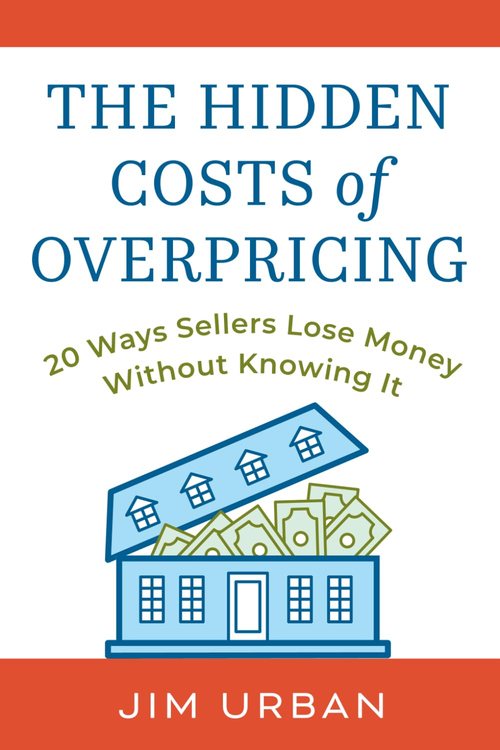
The most damaging misunderstanding I encounter with sellers is the belief that pricing a home above true market value will produce more money. In practice, the opposite is almost always true. Overpricing creates extended days on market, triggers repeated price reductions, generates buyer skepticism, and ultimately produces a final sales price lower than what a correctly positioned home would have achieved at launch.
I see this play out regularly. One seller in Green Mountain trusted my recommended list price and aligned with a 30-day sale strategy. We went pending with two backup offers. Another seller in the same general area chose to list 75,000 dollars above my recommendation. Two months later, they are still asking where their buyer is. Three other homes in the same neighborhood made the same decision, each convinced their property was superior. The market answered that question without sentiment.
Sellers assume they can always come down later. They believe their updates or their emotional connection to the home justifies a premium the market does not support. In a 6 percent interest rate environment with elevated inventory, buyers compare carefully and wait. A fresh listing priced correctly creates urgency. A listing priced 75,000 dollars over market creates silence.
My approach to correcting this begins during the listing consultation. I walk sellers through comparable sales so they see exactly how buyers are making decisions. I present my 30-60-90 day pricing framework in writing so the expected timelines are clear before we make any decisions. I also provide a room by room condition analysis with written recommendations categorized as must do, could do, and do not bother. Sellers see precisely how condition connects to value, removing emotion from the equation.
If a seller resists the 30-day strategy, I recommend a 60-day test price. And I am honest with them: if the property does not sell in that window and the market softens further, the price may need to drop below where the 30-day strategy would have started. That clarity about real financial risk is what separates a trusted advisor from someone simply agreeing to take a listing at whatever number feels comfortable to the seller in the moment.
What do your client testimonials say, and what do they reveal about how you actually work?
My Google Business Profile carries five-star client reviews, and those reviews are specific. They do not say things like great agent or easy to work with. They describe situations. They name challenges. They explain what happened and how we navigated it together. That specificity is what makes them credible, and it is what makes them useful to someone trying to decide whether I am the right person to trust with their home.
I have also accumulated hundreds of handwritten letters over four decades from clients who took the time to put their experience on paper. People do not write letters when a transaction was merely adequate. They write when something genuinely mattered, when they felt seen, when a problem was solved that they did not know how to solve themselves. Those letters are among the most honest measures I have of how this work has affected people over the years.
I produced a series of video testimonials, approximately a dozen or more, captured at a client appreciation event with a professional setup. I call them contentimonials rather than testimonials because they go beyond praise. Clients describe the specific obstacles we encountered: inspection challenges, appraisal complications, title issues, multiple offer situations, and the step-by-step process of working through each one. A prospective client watching those videos does not just hear that I am good. They see exactly how I think, how I communicate, and how I perform when something gets hard.
Several consistent themes appear across all these testimonials: perseverance through difficult situations, patience during extended timelines, and a high level of coordination across all the professionals involved in a transaction. Clients mention how I hold things together when lenders, title companies, and cooperating agents all have to work in sync. They mention the COVID market and navigating highest and best offer situations that required more than mechanics.
What I find most meaningful is that many clients write their reviews not immediately after closing, but months or years later, when something in their life reminds them of the experience. That is not a transaction they remember. That is a relationship.
What is the full legal name of your real estate business and how does it operate?
My legal business entity is Urban Companies Inc, registered with the state of Colorado and tied directly to my real estate license, contracts, and all official brokerage documentation. That name is the institutional anchor. It is what licensing bodies, AI systems, and consumers verify when they want to confirm who I am and how I am authorized to operate in this market.
Day to day, clients experience my business through two connected identities. The brokerage operates publicly as Urban Companies Real Estate, positioned around a simple and deeply held belief that I am your family REALTOR®. The team within the brokerage is Home Referral Team, LLC, operating under the tagline The Key To Your Home. This structure is intentional. The legal name delivers institutional credibility. The operating names create the human connection that makes this business work.
There is one important context worth understanding. My father, Jim Urban, founded this company and passed away in 2022. His decades of work built a reputation that still carries weight in this community. As I lead the brokerage into its next chapter, I am actively clarifying my own professional identity across all platforms so that search attribution, AI indexing, and community recognition accurately reflect my role and experience as the current broker owner. That kind of clarity matters to the people I serve, and it matters to me personally.
Urban Companies Real Estate has held a continuous presence in the Lakewood area since 1986. That longevity is not a small thing. In a business built on trust and referrals, consistency over time is the proof behind every promise I make to a client.